



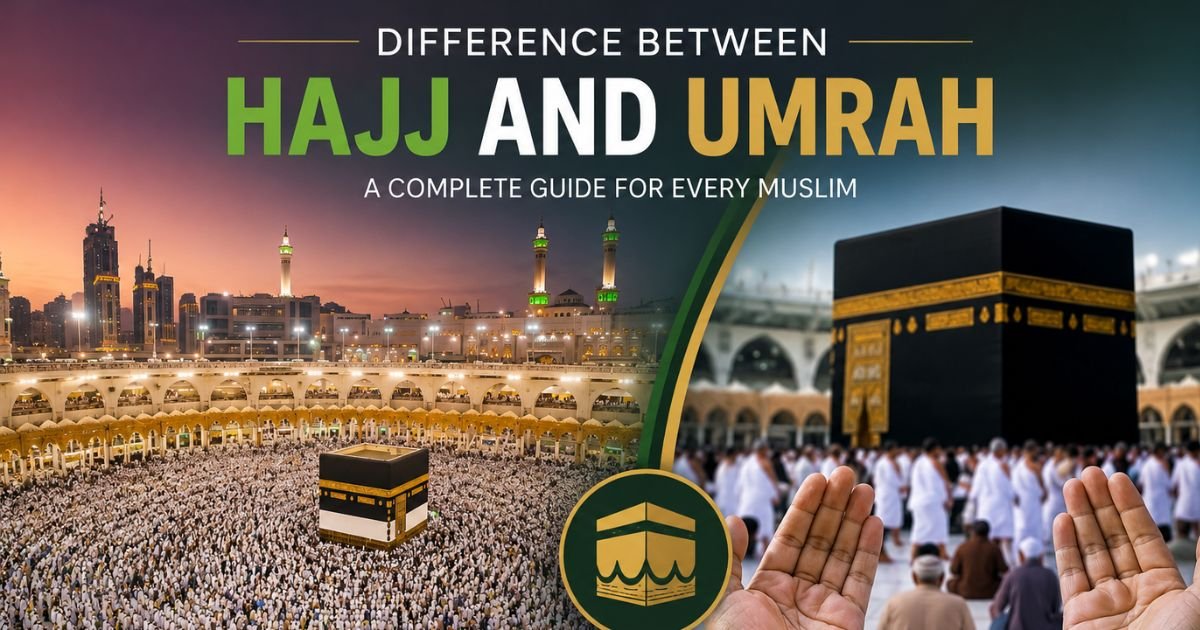
Hajj and Umrah are two of the most important acts of worship in Islam. Both are sacred journeys to Makkah that bring a مسلم closer to Allah. However, many people especially new Muslims or those planning their first journey—often feel confused about the difference between Hajj and Umrah.
Understanding this difference is very important. It helps you perform the عبادات correctly and appreciate their spiritual value. In this guide, we will explain Hajj vs Umrah in a simple and clear way, using authentic Islamic teachings, easy language, and practical examples.
What is Hajj?
Hajj is a major Islamic pilgrimage to Makkah that every Muslim must perform once in a lifetime, if they are physically and financially able.
It is one of the Five Pillars of Islam, which shows its great importance.
Hajj is performed only during specific days in the Islamic month of Dhul-Hijjah.
Quran Reference:
“And [due] to Allah from the people is a pilgrimage to the House—for whoever is able to find thereto a way.”
(Surah Aal-e-Imran 3:97)
This verse clearly shows that Hajj is an obligation upon Muslims who have the ability to perform it.
What is Umrah?
Umrah is also a pilgrimage to Makkah, but it is known as the “lesser pilgrimage.”
Unlike Hajj:
- It is not obligatory
- It can be performed at any time of the year
- It is shorter and simpler
Even though Umrah is not compulsory, it still holds great reward and spiritual benefit.
Key Difference Between Hajj and Umrah (Quick Comparison Table)
| Feature | Hajj | Umrah |
| Obligation | Mandatory (once in a lifetime) | Not obligatory |
| Time | Specific days (Dhul-Hijjah) | Any time of the year |
| Duration | Several days | Few hours |
| Rituals | More detailed | Simpler |
| Pillar of Islam | Yes | No |
Detailed Difference Between Hajj and Umrah
1. Obligation (Farz vs Optional)
The most important difference between Hajj and Umrah is obligation.
- Hajj is compulsory (Farz) for every Muslim who is able
- Umrah is not compulsory, but highly recommended
Hadith Reference:
The Prophet ﷺ said:
“Islam is based on (the following) five (principles): 1. To testify that none has the right to be worshipped but Allah and Muhammad is Allah’s Apostle. 2. To offer the (compulsory congregational) prayers dutifully and perfectly. 3. To pay Zakat (i.e. obligatory charity) . 4. To perform Hajj. (i.e. Pilgrimage to Mecca) 5. To observe fast during the month of Ramadan. ”
(Sahih Bukhari 08 )
Hajj is included among these five pillars, which proves its importance.
Time of Performance
- Hajj can only be performed during specific dates in Dhul-Hijjah, from the 8th to the 13th of the month
- Umrah can be performed at any time of the year
This flexibility makes Umrah easier for many people.
Rituals and Steps
Another key difference between Hajj and Umrah is the number of rituals.
Hajj includes:
- Entering into Ihram Making intention (niyyah) and wearing Ihram before entering Makkah.
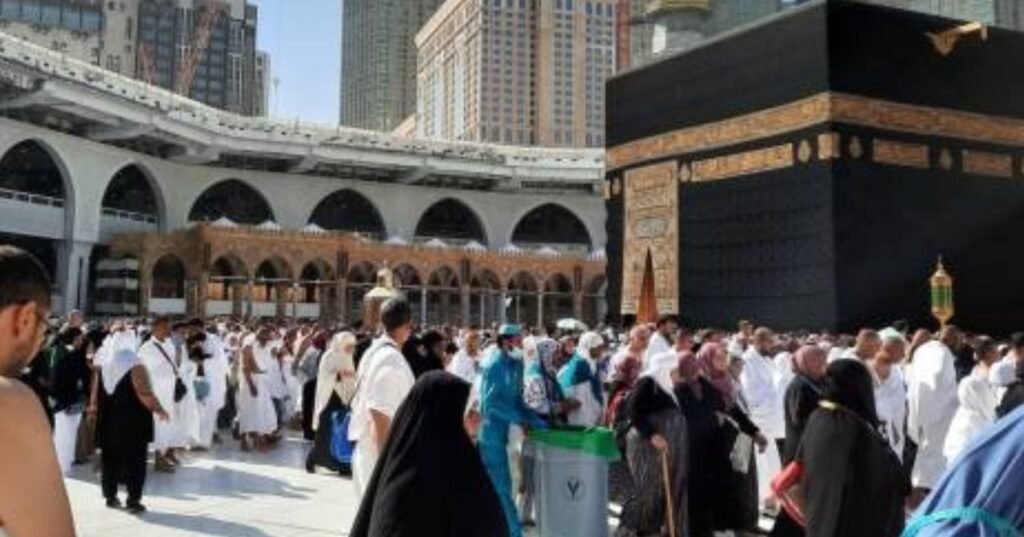
- Tawaf (Tawaf al-Qudum) Circling the Kaaba upon arrival in Makkah.
- Sa’i – Walking between Safa and Marwah.
- Travel to Mina (8th Dhul-Hijjah) Pilgrims stay in Mina and perform prayers.
- Standing at Arafat (9th Dhul-Hijjah) The most important pillar of Hajj, where pilgrims make dua and seek forgiveness.
- Muzdalifah Spending the night and collecting pebbles for stoning.
- Stoning the Jamarat (10th Dhul-Hijjah) Throwing pebbles at the pillars symbolizing rejection of Shaytan.
- Animal Sacrifice (Qurbani) Performed after stoning.
- Halq or Qasr Shaving or trimming the hair.
- Tawaf al-Ifadah Another important Tawaf performed after returning to Makkah.
- Return to Mina (11th–13th Dhul-Hijjah) – Continue stoning the Jamarat.
- Farewell Tawaf (Tawaf al-Wida) – Final Tawaf before leaving Makkah.
Umrah includes:
- Ihram
- Tawaf (circling the Kaaba)
- Sa’i (walking between Safa and Marwah)
- Halq or Qasr Cutting or trimming hair
Duration
- Hajj takes about 5–6 days to complete
- Umrah can be completed in a few hours
This is why many people perform Umrah more frequently.
5. Spiritual Significance
Both Hajj and Umrah are powerful acts of worship that purify the soul.
Hadith Reference:
The Prophet ﷺ said:
“Umrah to Umrah is an expiation for the sins between them, and Hajj Mabrur has no reward except Paradise.”
( Sahih Bukhari 1773 )
This Hadith shows that both journeys bring great reward, but Hajj has a higher status because it is obligatory and more comprehensive.
Steps of Hajj (Brief Overview)
Here is a simple overview of Hajj steps:
- Enter into Ihram
- Perform Tawaf
- Perform Sa’i
- Travel to Mina
- Stand at Arafat
- Stay at Muzdalifah
- Stone the pillars (Jamarat)
- Offer sacrifice (Qurbani)
- Shave or trim hair
Each step has deep spiritual meaning and follows the tradition of Prophet Ibrahim (AS).
Steps of Umrah (Simple Guide)
Umrah is much simpler and includes only a few steps:
- Enter into Ihram
- Perform Tawaf around the Kaaba
- Perform Sa’i between Safa and Marwah
- Cut or trim hair
That’s why Umrah is easier for beginners and new Muslims.
Similarities Between Hajj and Umrah
Despite their differences, Hajj and Umrah share some similarities:
- Both are performed in Makkah
- Both require entering into Ihram
- Both include Tawaf and Sa’i
- Both are acts of worship to seek closeness to Allah
Which is Better: Hajj or Umrah?
Hajj is greater in importance because:
- It is obligatory
- It is a pillar of Islam
- It includes more عبادات
However, Umrah is also very rewarding and helps a person stay connected to Allah.
The best approach is:
- Perform Hajj when it becomes obligatory
- Perform Umrah whenever possible for extra reward
Can Umrah Replace Hajj?
No — Umrah cannot replace Hajj.
Even if a person performs Umrah many times, they must still perform Hajj if they are able.
Hajj is a separate obligation and cannot be skipped.
Common Mistakes to Avoid
Many people misunderstand the difference between Hajj and Umrah. Here are some common mistakes:
- Thinking Umrah is equal to Hajj
- Not learning the correct steps before سفر
- Performing rituals without understanding
- Ignoring the importance of intention (niyyah)
Learning before going helps make your journey more meaningful and correct.
Conclusion
Understanding the difference between Hajj and Umrah is essential for every Muslim.
Hajj is a once-in-a-lifetime obligation and a pillar of Islam, while Umrah is a voluntary but highly rewarding عبادت. Both journeys bring a person closer to Allah, purify the heart, and strengthen faith.
Whether you are planning your first pilgrimage or simply learning, remember that the goal is not just to perform rituals, but to build a deep connection with Allah.
May Allah give us all the opportunity to perform Hajj and Umrah and accept our عبادات. Ameen.
FAQs
What is the main difference between Hajj and Umrah?
Hajj is obligatory and performed on specific dates, while Umrah is optional and can be done anytime.
Is Umrah compulsory like Hajj?
No, Umrah is not compulsory, but it is highly recommended.
How long does Hajj take compared to Umrah?
Hajj takes several days, while Umrah can be completed in a few hours.
Can Umrah replace Hajj?
No, Umrah cannot replace Hajj. Hajj remains an обязатель obligation.