



Life brings moments of happiness, uncertainty, hardship, and hope. At times, we seek forgiveness for our mistakes. At other times, we ask Allah for guidance, patience, knowledge, or blessings for our families. Whatever our circumstances, the Quran teaches us how to turn to Allah with sincerity and humility.
The duas from the Quran are more than words to recite. They teach us what to ask for, how to acknowledge our dependence on Allah, and how to seek His mercy in both this world and the Hereafter.
Some of these beautiful supplications were made by the Prophets, while others are taught directly to believers in the Quran. They include prayers for forgiveness, protection, righteous children, beneficial knowledge, steadfast faith, and acceptance of good deeds.
In this guide, you will discover 30 Quranic duas with Arabic text, English transliteration, translation, and references. Each supplication is accompanied by a brief explanation to help you understand its meaning and reflect upon its message.
We will begin with short and easy duas to memorize before moving on to longer supplications that address different aspects of a Muslim’s life.
Short and Easy Duas from the Quran to Memorize
Memorizing short Quranic duas is a meaningful way to begin learning the language of supplication. A few words, when understood and recited sincerely, can express a believer’s deepest hopes and needs.
The following ten supplications are suitable for beginners, children, new Muslims, and anyone who wishes to develop the habit of remembering Allah throughout the day.
1. Dua for Increasing Knowledge
رَّبِّ زِدْنِي عِلْمًا
Transliteration: Rabbi zidni ‘ilma.
English Translation: “My Lord, increase me in knowledge.”
Reference: Surah Taha (20:114)
This beautiful supplication teaches us that knowledge is a blessing from Allah and that we should continually seek to increase it.
In Surah Taha, Allah instructs Prophet Muhammad ﷺ to ask for an increase in knowledge. The verse reminds us that learning is a lifelong journey and that even the most knowledgeable person remains dependent upon Allah.
A student can recite this dua before studying the Quran, attending an Islamic lesson, or beginning any beneficial learning activity.
However, seeking knowledge also requires effort. We should combine this supplication with sincere study, reflection, and the willingness to act upon what we learn.
2. Dua for Mercy Upon Parents
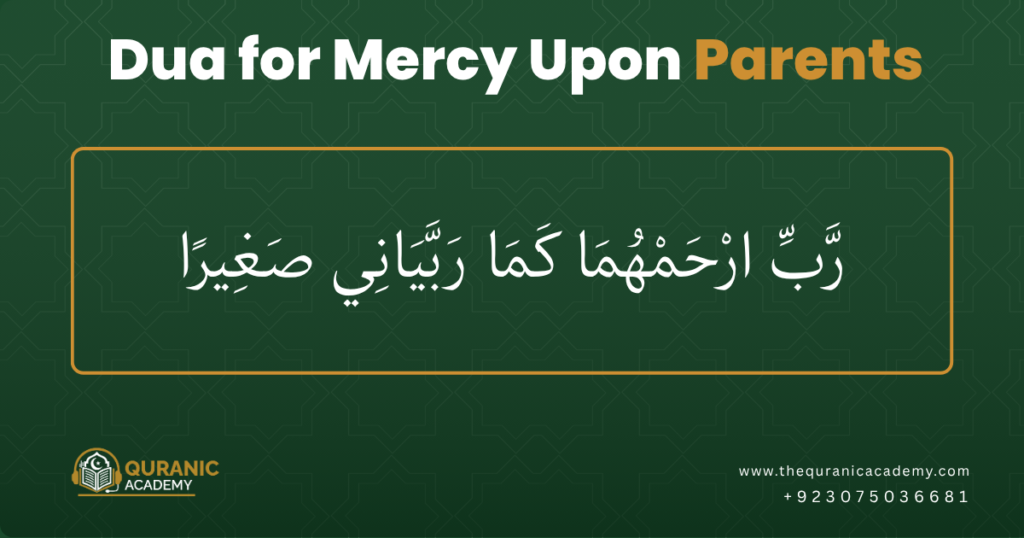
رَّبِّ ارْحَمْهُمَا كَمَا رَبَّيَانِي صَغِيرًا
Transliteration: Rabbirhamhuma kama rabbayani saghira.
English Translation: “My Lord, have mercy upon them as they raised me when I was small.”
Reference: Surah Al-Isra (17:24)
Our parents are among the greatest blessings Allah has given us. This Quranic dua teaches us to remember their care, sacrifices, and kindness, especially during our childhood.
The preceding verses instruct believers to treat their parents respectfully, speak to them gently, and show humility toward them.
This supplication is therefore closely connected to the practical responsibility of honoring our parents.
We can make dua for our parents while they are alive and continue praying for them after their passing. The words also remind us to express gratitude through our behavior, not merely through speech.
3. Dua for Righteous Children
رَبِّ هَبْ لِي مِنَ الصَّالِحِينَ
Transliteration: Rabbi hab li minas-salihin.
English Translation: “My Lord, grant me [a child] from among the righteous.”
Reference: Surah As-Saffat (37:100)
This supplication was made by Prophet Ibrahim (AS), who asked Allah to bless him with righteous offspring.
Notice that his prayer was not simply for a child, but for a child who would be among the righteous.
For Muslim parents and those hoping to have children, this dua reminds us that good character, faith, and obedience to Allah are among the most valuable qualities we can wish for our families.
Parents can also reflect on its message when raising their children, remembering that righteous upbringing requires love, patience, personal example, and consistent guidance.
4. Dua for Goodness and Provision
رَبِّ إِنِّي لِمَا أَنْزَلْتَ إِلَيَّ مِنْ خَيْرٍ فَقِيرٌ
Transliteration: Rabbi inni lima anzalta ilayya min khayrin faqir.
English Translation: “My Lord, indeed I am in need of whatever good You send down to me.”
Reference: Surah Al-Qasas (28:24)
Prophet Musa (AS) made this supplication after helping two women water their animals. He then withdrew to the shade and expressed his need before Allah.
The words are simple, yet they carry a profound acknowledgment: every good thing we receive ultimately comes from Allah.
The Arabic word khayr means goodness and is not restricted to money or material wealth.
A person seeking employment, lawful provision, relief from hardship, or any beneficial outcome may reflect upon this dua and ask Allah for what is good.
It also teaches us to remain humble and grateful, recognizing that our efforts and abilities do not make us independent of our Creator.
5. Dua for Forgiveness and Mercy
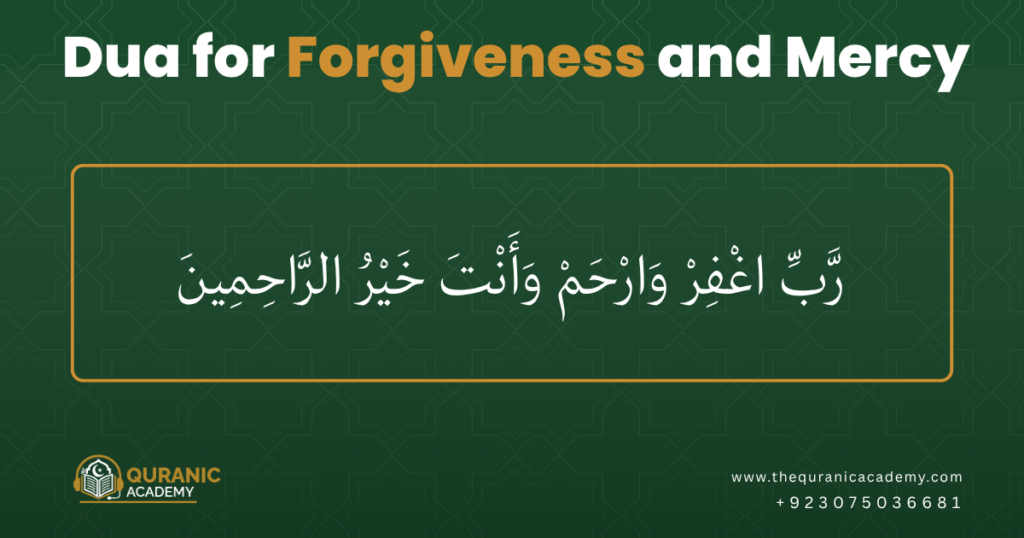
رَّبِّ اغْفِرْ وَارْحَمْ وَأَنْتَ خَيْرُ الرَّاحِمِينَ
Transliteration: Rabbighfir warham wa anta khayrur-rahimin.
English Translation: “My Lord, forgive and have mercy, and You are the best of those who show mercy.”
Reference: Surah Al-Mu’minun (23:118)
Every human being makes mistakes, and every believer needs Allah’s forgiveness and mercy.
This short supplication combines two important requests: forgiveness for our shortcomings and mercy from Allah.
Forgiveness concerns the removal of sins and their consequences, while Allah’s mercy encompasses His kindness, guidance, care, and blessings.
The dua teaches us to approach Allah with humility and hope rather than despair.
Whenever we recognize a mistake, we should turn to Allah sincerely, seek His forgiveness, and make an effort to correct our behavior.
6. Dua for Protection from Shaytan
رَّبِّ أَعُوذُ بِكَ مِنْ هَمَزَاتِ الشَّيَاطِينِ وَأَعُوذُ بِكَ رَبِّ أَنْ يَحْضُرُونِ
Transliteration: Rabbi a’udhu bika min hamazatish-shayatin. Wa a’udhu bika rabbi an yahdurun.
English Translation: “My Lord, I seek refuge in You from the incitements of the devils, and I seek refuge in You, my Lord, lest they be present with me.”
Reference: Surah Al-Mu’minun (23:97–98)
Allah teaches this supplication as a means of seeking refuge from the influence and presence of devils.
It reminds us that spiritual protection comes from Allah and that we should turn to Him when facing harmful thoughts, temptations, or influences that lead us away from what is right.
The dua also encourages us to remain mindful of our actions and surroundings.
Alongside seeking Allah’s protection, a Muslim should avoid situations that encourage wrongdoing and strive to maintain good habits, righteous company, and regular remembrance of Allah.
7. Dua for Patience and Steadfastness
رَبَّنَا أَفْرِغْ عَلَيْنَا صَبْرًا وَتَوَفَّنَا مُسْلِمِينَ
Transliteration: Rabbana afrigh ‘alayna sabran wa tawaffana muslimin.
English Translation: “Our Lord, pour upon us patience and let us die as Muslims.”
Reference: Surah Al-A’raf (7:126)
This supplication was made by the magicians who believed in Allah after witnessing the sign given to Prophet Musa (AS).
When Pharaoh threatened them with severe punishment, they turned to Allah and asked for patience and steadfastness in faith.
Their words teach us that patience is not simply waiting for a difficult situation to end. It also means remaining committed to what is right when doing so becomes challenging.
This dua is especially meaningful when facing pressure, fear, or hardship that tests our commitment to our faith.
8. Dua of Prophet Zakariyya for an Heir
رَبِّ لَا تَذَرْنِي فَرْدًا وَأَنْتَ خَيْرُ الْوَارِثِينَ
Transliteration: Rabbi la tadharni fardan wa anta khayrul-warithin.
English Translation: “My Lord, do not leave me alone, while You are the best of inheritors.”
Reference: Surah Al-Anbiya (21:89)
Prophet Zakariyya (AS) made this supplication when asking Allah for an heir.
The Quran tells us that Allah answered his prayer and granted him Yahya (AS).
This dua teaches believers to place their hopes before Allah, even when their circumstances appear difficult.
A person hoping for children may recite this supplication while remembering that Allah’s wisdom and decree are not limited by human expectations.
Its closing words also acknowledge that Allah is the ultimate inheritor of all things.
9. Dua for the Acceptance of Good Deeds
رَبَّنَا تَقَبَّلْ مِنَّا إِنَّكَ أَنْتَ السَّمِيعُ الْعَلِيمُ
Transliteration: Rabbana taqabbal minna innaka antas-sami’ul-‘alim.
English Translation: “Our Lord, accept [this] from us. Indeed, You are the All-Hearing, the All-Knowing.”
Reference: Surah Al-Baqarah (2:127)
Prophet Ibrahim (AS) and Prophet Ismail (AS) made this supplication while raising the foundations of the Ka’bah.
Despite performing such a significant act of worship, they still asked Allah to accept their efforts.
This teaches us an important lesson: completing a good deed is not the same as knowing that it has been accepted.
We should strive to perform our worship sincerely and according to Allah’s guidance while remaining humble about our efforts.
After Salah, charity, Quran recitation, or any other righteous action, this dua reminds us to seek Allah’s acceptance rather than becoming proud of what we have accomplished.
10. Dua for Guidance to the Straight Path
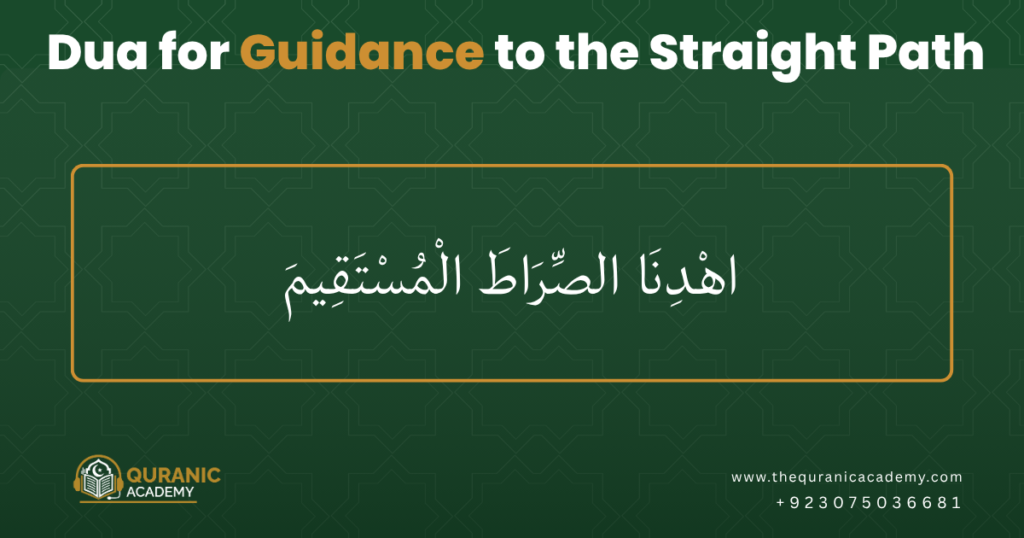
اهْدِنَا الصِّرَاطَ الْمُسْتَقِيمَ
Transliteration: Ihdinas-siratal-mustaqim.
English Translation: “Guide us to the straight path.”
Reference: Surah Al-Fatihah (1:6)
This supplication is part of Surah Al-Fatihah, the opening chapter of the Quran.
Muslims recite Surah Al-Fatihah in every rak’ah of Salah, repeatedly asking Allah for guidance.
The straight path is the path of truth, faith, and obedience to Allah.
This dua teaches us that guidance is not something we seek only once. We continually need Allah’s help to recognize what is right, follow it, and remain steadfast upon it.
For new Muslims and lifelong believers alike, understanding this supplication can bring greater meaning to the daily prayers.
Powerful Quranic Duas for Forgiveness, Guidance and Protection
The Quran contains supplications that teach believers how to respond to personal mistakes, illness, uncertainty, fear, and spiritual challenges.
These prayers were revealed in different circumstances, and understanding their context helps us appreciate their deeper meanings.
The following ten duas remind us to seek Allah’s forgiveness, rely upon His mercy, and remain steadfast through the changing circumstances of life.
11. Dua of Prophet Yunus for Repentance
لَا إِلَٰهَ إِلَّا أَنْتَ سُبْحَانَكَ إِنِّي كُنْتُ مِنَ الظَّالِمِينَ
Transliteration: La ilaha illa anta subhanaka inni kuntu minaz-zalimin.
English Translation: “There is no deity except You; exalted are You. Indeed, I have been among the wrongdoers.”
Reference: Surah Al-Anbiya (21:87)
This beautiful supplication was made by Prophet Yunus (AS) when he was in the darkness inside the great fish.
His words contain three essential elements of sincere repentance: acknowledging Allah’s oneness, declaring His perfection, and admitting one’s own wrongdoing.
Rather than making excuses, Prophet Yunus (AS) turned to Allah with humility.
The following verse tells us that Allah answered his supplication and delivered him from distress.
For anyone seeking forgiveness, this dua teaches the importance of recognizing our mistakes and returning sincerely to Allah.
True repentance also involves leaving the wrongdoing, regretting it, and resolving not to repeat it. If another person’s rights have been violated, those rights must also be addressed.
12. Dua of Prophet Ayyub During Illness and Hardship
أَنِّي مَسَّنِيَ الضُّرُّ وَأَنْتَ أَرْحَمُ الرَّاحِمِينَ
Transliteration: Anni massaniyad-durru wa anta arhamur-rahimin.
English Translation: “Indeed, adversity has touched me, and You are the Most Merciful of the merciful.”
Reference: Surah Al-Anbiya (21:83)
Prophet Ayyub (AS) made this supplication while experiencing severe hardship.
His prayer is remarkable for its simplicity. He describes his suffering and acknowledges Allah’s mercy without making demands.
The following verse explains that Allah responded to him and removed his affliction.
This dua teaches us that we can express our pain and difficulties to Allah while maintaining trust in His wisdom and mercy.
A person experiencing illness, emotional distress, or another hardship may find comfort in its meaning.
Making dua should also be accompanied by appropriate practical steps, including seeking medical care when needed. The Quranic account does not establish that reciting this supplication guarantees a particular medical outcome.
13. Dua for Good in This World and the Hereafter
رَبَّنَا آتِنَا فِي الدُّنْيَا حَسَنَةً وَفِي الْآخِرَةِ حَسَنَةً وَقِنَا عَذَابَ النَّارِ
Transliteration: Rabbana atina fid-dunya hasanatan wa fil-akhirati hasanatan wa qina ‘adhaban-nar.
English Translation: “Our Lord, give us good in this world and good in the Hereafter, and protect us from the punishment of the Fire.”
Reference: Surah Al-Baqarah (2:201)
This is one of the most comprehensive supplications in the Quran.
It teaches us to seek goodness in both our worldly lives and our eternal lives.
The goodness of this world may include beneficial knowledge, lawful provision, good health, righteous family relationships, and opportunities to perform good deeds.
The goodness of the Hereafter includes Allah’s pleasure, forgiveness, and the blessings of Paradise.
In his commentary on this verse, Ibn Kathir explains that the supplication encompasses the good of this world and the Hereafter while seeking protection from the Fire.
The dua reminds us that Islam does not require believers to neglect their worldly responsibilities. Rather, we should seek what is beneficial in this life without losing sight of our ultimate destination.
14. Dua for Steadfastness in Faith
رَبَّنَا لَا تُزِغْ قُلُوبَنَا بَعْدَ إِذْ هَدَيْتَنَا وَهَبْ لَنَا مِنْ لَدُنْكَ رَحْمَةً إِنَّكَ أَنْتَ الْوَهَّابُ
Transliteration: Rabbana la tuzigh qulubana ba’da idh hadaytana wa hab lana min ladunka rahmah, innaka antal-wahhab.
English Translation: “Our Lord, do not let our hearts deviate after You have guided us, and grant us mercy from Yourself. Indeed, You are the Bestower.”
Reference: Surah Ali ‘Imran (3:8)
Guidance is among the greatest blessings Allah grants a believer. Yet maintaining that guidance requires continued reliance upon Him.
This supplication teaches us to ask Allah to protect our hearts from turning away from the truth after recognizing it.
The verse also reminds us that faith should be accompanied by humility.
A person should not assume that past good deeds or religious knowledge make them independent of Allah’s guidance.
For new Muslims, this dua may be particularly meaningful as they continue learning and adjusting to their new way of life.
For those who have practiced Islam for many years, it is a reminder to remain sincere, seek beneficial knowledge, and avoid becoming careless about their spiritual development.
15. Dua of Prophet Adam and Hawwa for Forgiveness
رَبَّنَا ظَلَمْنَا أَنْفُسَنَا وَإِنْ لَمْ تَغْفِرْ لَنَا وَتَرْحَمْنَا لَنَكُونَنَّ مِنَ الْخَاسِرِينَ
Transliteration: Rabbana zalamna anfusana wa illam taghfir lana wa tarhamna lanakunanna minal-khasirin.
English Translation: “Our Lord, we have wronged ourselves, and if You do not forgive us and have mercy upon us, we will surely be among the losers.”
Reference: Surah Al-A’raf (7:23)
This supplication was made by Prophet Adam (AS) and his wife after they disobeyed Allah’s command.
Instead of blaming others or denying their mistake, they acknowledged their wrongdoing and sought Allah’s forgiveness.
Their words teach us that recognizing our mistakes is an essential part of returning to Allah.
The dua also reminds us that forgiveness and mercy are blessings we desperately need.
When we commit a sin, we should not allow shame or despair to prevent us from seeking Allah’s forgiveness.
Instead, we should turn to Him sincerely, correct our behavior, and continue striving to become better Muslims.
16. Dua of Prophet Musa for Confidence and Ease
رَبِّ اشْرَحْ لِي صَدْرِي وَيَسِّرْ لِي أَمْرِي وَاحْلُلْ عُقْدَةً مِنْ لِسَانِي يَفْقَهُوا قَوْلِي
Transliteration: Rabbishrah li sadri. Wa yassir li amri. Wahlul ‘uqdatan min lisani. Yafqahu qawli.
English Translation: “My Lord, expand for me my chest, ease for me my task, untie the knot from my tongue, so that they may understand my speech.”
Reference: Surah Taha (20:25–28)
Prophet Musa (AS) made this supplication when Allah commanded him to go to Pharaoh and convey His message.
Recognizing the difficulty of the task, Musa (AS) asked Allah for inner strength, ease, and the ability to communicate clearly.
This dua teaches us that seeking Allah’s assistance is an important part of preparing for difficult responsibilities.
Students, teachers, speakers, and anyone facing a challenging conversation may reflect upon its meaning.
The supplication is not simply a request for confidence. It is also a reminder that successful communication requires clarity, sincerity, and Allah’s help.
When facing an important responsibility, we should combine dua with proper preparation and honest effort.
17. Dua for Forgiveness and Protection from the Fire
رَبَّنَا إِنَّنَا آمَنَّا فَاغْفِرْ لَنَا ذُنُوبَنَا وَقِنَا عَذَابَ النَّارِ
Transliteration: Rabbana innana amanna faghfir lana dhunubana wa qina ‘adhaban-nar.
English Translation: “Our Lord, indeed we have believed, so forgive us our sins and protect us from the punishment of the Fire.”
Reference: Surah Ali ‘Imran (3:16)
This Quranic supplication combines a declaration of faith with a request for forgiveness and protection in the Hereafter.
It reminds us that believing in Allah should lead us toward humility, repentance, and righteous action.
A believer does not rely solely upon personal achievements or acts of worship. Rather, they seek Allah’s mercy while striving to fulfill their responsibilities.
The prayer also encourages us to remember the Hereafter when making decisions in our daily lives.
Our actions, relationships, and choices should reflect our desire to earn Allah’s pleasure and avoid what displeases Him.
18. Dua for Deliverance from Oppression
رَبَّنَا لَا تَجْعَلْنَا فِتْنَةً لِلْقَوْمِ الظَّالِمِينَ وَنَجِّنَا بِرَحْمَتِكَ مِنَ الْقَوْمِ الْكَافِرِينَ
Transliteration: Rabbana la taj’alna fitnatan lil-qawmiz-zalimin. Wa najjina birahmatika minal-qawmil-kafirin.
English Translation: “Our Lord, do not make us a trial for the wrongdoing people. And save us by Your mercy from the disbelieving people.”
Reference: Surah Yunus (10:85–86)
This supplication was made by the believers who followed Prophet Musa (AS) during a time of oppression.
They asked Allah to protect them from becoming a trial for the wrongdoing people and to deliver them through His mercy.
The dua teaches us to seek Allah’s protection when facing injustice, persecution, or circumstances that threaten our ability to practice our faith.
It also reminds us that believers should remain committed to truth and justice even when confronted with difficulty.
Alongside supplication, those experiencing oppression should seek appropriate practical assistance and take lawful steps to protect themselves and others.
19. Dua for a Blessed Arrival
رَبِّ أَنْزِلْنِي مُنْزَلًا مُبَارَكًا وَأَنْتَ خَيْرُ الْمُنْزِلِينَ
Transliteration: Rabbi anzilni munzalan mubarakan wa anta khayrul-munzilin.
English Translation: “My Lord, let me land at a blessed landing place, and You are the best to accommodate [us].”
Reference: Surah Al-Mu’minun (23:29)
This supplication appears in the account of Prophet Nuh (AS).
Allah instructed him to recite these words when disembarking from the Ark.
The dua teaches us to seek Allah’s blessings when arriving at a destination or entering a new stage of life.
Its meaning is especially relevant when we consider how much we depend upon Allah for safety, stability, and beneficial outcomes.
A person moving to a new home, beginning a journey, or entering unfamiliar circumstances may reflect upon this prayer.
However, the verse should be understood within its original Quranic context rather than presented as a specifically prescribed ritual for every journey or house move.
20. Dua for Light and Forgiveness
رَبَّنَا أَتْمِمْ لَنَا نُورَنَا وَاغْفِرْ لَنَا إِنَّكَ عَلَىٰ كُلِّ شَيْءٍ قَدِيرٌ
Transliteration: Rabbana atmim lana nurana waghfir lana innaka ‘ala kulli shay’in qadir.
English Translation: “Our Lord, perfect for us our light and forgive us. Indeed, You are over all things competent.”
Reference: Surah At-Tahrim (66:8)
This supplication appears in a verse describing the believers on the Day of Judgment.
They will ask Allah to perfect their light and forgive them.
The prayer reminds us that the consequences of our faith and actions extend beyond our worldly lives.
It encourages us to seek Allah’s forgiveness and strive for sincere belief and righteous conduct.
The verse also connects repentance with hope in Allah’s mercy.
Rather than becoming complacent about our spiritual state, we should continue asking Allah to forgive our shortcomings and grant us success in the Hereafter.
Beautiful Duas from the Quran for Family, Faith and the Hereafter
The Quran teaches us to make dua not only for ourselves but also for our parents, children, families, and fellow believers.
It also reminds us that our greatest success is not measured solely by worldly achievements. True success includes sincere faith, accepted deeds, Allah’s forgiveness, and His mercy in the Hereafter.
The following supplications are generally longer and contain several requests within a single prayer. Take time to understand their meanings and memorize them gradually.
21. Dua for Establishing Salah
رَبِّ اجْعَلْنِي مُقِيمَ الصَّلَاةِ وَمِنْ ذُرِّيَّتِي رَبَّنَا وَتَقَبَّلْ دُعَاءِ
Transliteration: Rabbij’alni muqimas-salati wa min dhurriyyati rabbana wa taqabbal du’a.
English Translation: “My Lord, make me an establisher of prayer, and [many] from my descendants. Our Lord, and accept my supplication.”
Reference: Surah Ibrahim (14:40)
This supplication was made by Prophet Ibrahim (AS), who asked Allah to make him and his descendants steadfast in establishing Salah.
It teaches us that prayer is not merely a personal responsibility. We should also care about the spiritual well-being of our families and future generations.
Notice that Prophet Ibrahim (AS) began by asking Allah to make him an establisher of prayer before asking the same for his descendants.
This is an important reminder for parents: our personal commitment to worship is part of the example we set for our children.
Parents can reflect upon this dua while teaching their children Salah, helping them develop a consistent prayer routine, and encouraging them with patience and kindness.
22. Dua for Forgiveness of Parents and Believers
رَبَّنَا اغْفِرْ لِي وَلِوَالِدَيَّ وَلِلْمُؤْمِنِينَ يَوْمَ يَقُومُ الْحِسَابُ
Transliteration: Rabbanaghfir li wa liwalidayya wa lil-mu’minina yawma yaqumul-hisab.
English Translation: “Our Lord, forgive me and my parents and the believers the Day the account is established.”
Reference: Surah Ibrahim (14:41)
This supplication of Prophet Ibrahim (AS) teaches us to seek forgiveness not only for ourselves but also for our parents and the wider community of believers.
It reminds us that our concern for others should extend beyond their worldly comfort and happiness.
We should also care about their ultimate success in the Hereafter.
The closing words direct our attention to the Day of Judgment, when every person will be accountable before Allah.
An important clarification: This verse records a supplication made by Prophet Ibrahim (AS). The Quran also explains in Surah At-Tawbah (9:113–114) the ruling concerning seeking forgiveness for those who died upon disbelief, including the context of Ibrahim’s prayer for his father. Therefore, this dua should not be used to imply that seeking forgiveness for every deceased parent is permissible regardless of their religious state.
A Muslim may pray for the guidance and well-being of living non-Muslim parents while continuing to treat them with kindness and respect.
23. Dua for Righteous Spouses and Children
رَبَّنَا هَبْ لَنَا مِنْ أَزْوَاجِنَا وَذُرِّيَّاتِنَا قُرَّةَ أَعْيُنٍ وَاجْعَلْنَا لِلْمُتَّقِينَ إِمَامًا
Transliteration: Rabbana hab lana min azwajina wa dhurriyyatina qurrata a’yunin waj’alna lil-muttaqina imama.
English Translation: “Our Lord, grant us from among our spouses and offspring comfort to our eyes and make us an example for the righteous.”
Reference: Surah Al-Furqan (25:74)
This beautiful dua appears among the qualities of the servants of the Most Merciful described in Surah Al-Furqan.
The supplication asks Allah to make our spouses and children a source of comfort and joy.
In its Quranic context, this comfort is closely connected to righteousness, faith, and obedience to Allah.
The prayer goes beyond asking for a happy family. It also asks Allah to make us examples for those who are mindful of Him.
This teaches us that family life and personal righteousness are connected.
A Muslim should strive to build a home where kindness, good character, mutual respect, and remembrance of Allah are encouraged.
The dua is meaningful for married couples, parents, and anyone who hopes to establish a righteous family.
24. Dua of Prophet Sulayman for Gratitude and Righteous Deeds
رَبِّ أَوْزِعْنِي أَنْ أَشْكُرَ نِعْمَتَكَ الَّتِي أَنْعَمْتَ عَلَيَّ وَعَلَىٰ وَالِدَيَّ وَأَنْ أَعْمَلَ صَالِحًا تَرْضَاهُ وَأَدْخِلْنِي بِرَحْمَتِكَ فِي عِبَادِكَ الصَّالِحِينَ
Transliteration: Rabbi awzi’ni an ashkura ni’matakallati an’amta ‘alayya wa ‘ala walidayya wa an a’mala salihan tardahu wa adkhilni birahmatika fi ‘ibadikas-salihin.
English Translation: “My Lord, enable me to be grateful for Your favor which You have bestowed upon me and upon my parents, and to do righteousness of which You approve. And admit me by Your mercy into [the ranks of] Your righteous servants.”
Reference: Surah An-Naml (27:19)
Prophet Sulayman (AS) made this supplication after understanding the words of an ant and recognizing Allah’s extraordinary blessings upon him.
Despite being granted knowledge, authority, and remarkable abilities, he turned to Allah with gratitude.
His prayer teaches us that gratitude is more than acknowledging the blessings we receive.
True gratitude should influence our actions and encourage us to use Allah’s gifts in ways that please Him.
The dua contains three important requests: the ability to remain grateful, the ability to perform righteous deeds, and admission among Allah’s righteous servants through His mercy.
It is a meaningful supplication for anyone who wishes to develop gratitude and use their knowledge, wealth, time, or abilities responsibly.
25. Dua for Gratitude, Parents and Righteous Offspring
رَبِّ أَوْزِعْنِي أَنْ أَشْكُرَ نِعْمَتَكَ الَّتِي أَنْعَمْتَ عَلَيَّ وَعَلَىٰ وَالِدَيَّ وَأَنْ أَعْمَلَ صَالِحًا تَرْضَاهُ وَأَصْلِحْ لِي فِي ذُرِّيَّتِي إِنِّي تُبْتُ إِلَيْكَ وَإِنِّي مِنَ الْمُسْلِمِينَ
Transliteration: Rabbi awzi’ni an ashkura ni’matakallati an’amta ‘alayya wa ‘ala walidayya wa an a’mala salihan tardahu wa aslih li fi dhurriyyati inni tubtu ilayka wa inni minal-muslimin.
English Translation: “My Lord, enable me to be grateful for Your favor which You have bestowed upon me and upon my parents, and to do righteousness of which You approve, and make righteous for me my offspring. Indeed, I have repented to You, and indeed, I am of the Muslims.”
Reference: Surah Al-Ahqaf (46:15)
This supplication appears in a verse that emphasizes kindness toward parents and recognizes the hardships a mother experiences during pregnancy, childbirth, and raising her child.
The verse also mentions a person reaching maturity and the age of forty, reflecting upon Allah’s blessings and turning to Him in gratitude.
The dua shares some wording with the supplication of Prophet Sulayman (AS) in Surah An-Naml, but it includes an additional request for the righteousness of one’s offspring and a declaration of repentance and submission to Allah.
It reminds us that gratitude toward Allah, respect for parents, personal righteousness, and concern for future generations are closely connected.
Although the verse mentions the age of forty, believers of different ages can reflect upon its lessons and seek Allah’s help in becoming grateful and righteous.
26. Dua for Forgiveness and a Pure Heart
رَبَّنَا اغْفِرْ لَنَا وَلِإِخْوَانِنَا الَّذِينَ سَبَقُونَا بِالْإِيمَانِ وَلَا تَجْعَلْ فِي قُلُوبِنَا غِلًّا لِلَّذِينَ آمَنُوا رَبَّنَا إِنَّكَ رَءُوفٌ رَحِيمٌ
Transliteration: Rabbanaghfir lana wa li-ikhwaninalladhina sabaquna bil-imani wa la taj’al fi qulubina ghillan lilladhina amanu rabbana innaka ra’ufur-rahim.
English Translation: “Our Lord, forgive us and our brothers who preceded us in faith and put not in our hearts [any] resentment toward those who have believed. Our Lord, indeed You are Kind and Merciful.”
Reference: Surah Al-Hashr (59:10)
This supplication teaches believers to pray for those who came before them in faith and to ask Allah to remove resentment from their hearts.
The verse highlights an important quality of a healthy Muslim community: sincere concern for others.
A believer should not allow envy, bitterness, or unnecessary hostility to dominate their heart.
Instead, we should strive to develop forgiveness, compassion, and goodwill toward fellow Muslims.
This dua also reminds us to appreciate the believers who preserved and transmitted Islamic knowledge before us.
When studying the Quran and Sunnah, we benefit from the efforts of earlier generations who dedicated their lives to learning, teaching, and preserving the religion.
27. Dua for Sincere Submission and Righteous Descendants
رَبَّنَا وَاجْعَلْنَا مُسْلِمَيْنِ لَكَ وَمِنْ ذُرِّيَّتِنَا أُمَّةً مُسْلِمَةً لَكَ وَأَرِنَا مَنَاسِكَنَا وَتُبْ عَلَيْنَا إِنَّكَ أَنْتَ التَّوَّابُ الرَّحِيمُ
Transliteration: Rabbana waj’alna muslimayni laka wa min dhurriyyatina ummatan muslimatan laka wa arina manasikana wa tub ‘alayna innaka antat-tawwabur-rahim.
English Translation: “Our Lord, and make us Muslims [in submission] to You and from our descendants a Muslim nation [in submission] to You. And show us our rites and accept our repentance. Indeed, You are the Accepting of Repentance, the Merciful.”
Reference: Surah Al-Baqarah (2:128)
Prophet Ibrahim (AS) and Prophet Ismail (AS) made this supplication while building the Ka’bah.
Their prayer teaches us that sincere submission to Allah requires continuous effort and dependence upon His guidance.
They asked Allah to make them fully submissive to Him, to grant righteousness to their descendants, and to teach them the proper rites of worship.
They also sought His forgiveness and mercy.
This is particularly meaningful because even the Prophets, who were chosen and guided by Allah, demonstrated humility and devotion through supplication.
The dua encourages us to learn how to worship Allah correctly rather than relying solely upon personal assumptions or inherited customs.
It also reminds parents and teachers to care about the religious education of future generations.
28. Dua for Forgiveness, Patience and Steadfastness
رَبَّنَا اغْفِرْ لَنَا ذُنُوبَنَا وَإِسْرَافَنَا فِي أَمْرِنَا وَثَبِّتْ أَقْدَامَنَا وَانْصُرْنَا عَلَى الْقَوْمِ الْكَافِرِينَ
Transliteration: Rabbanaghfir lana dhunubana wa israfana fi amrina wa thabbit aqdamana wansurna ‘alal-qawmil-kafirin.
English Translation: “Our Lord, forgive us our sins and the excess [committed] in our affairs and plant firmly our feet and give us victory over the disbelieving people.”
Reference: Surah Ali ‘Imran (3:147)
This supplication appears in the Quranic account of devoted believers who remained steadfast alongside the Prophets during severe trials.
Their prayer begins with a request for forgiveness before asking Allah for firmness and victory.
This order teaches us that spiritual strength is closely connected to humility and recognition of our shortcomings.
The supplication also reminds us that steadfastness requires more than physical courage. It involves maintaining faith, sincerity, and obedience to Allah under difficult circumstances.
The verse occurs in the context of conflict. Its final request should therefore be understood within that Quranic setting, rather than presented as a general prayer against people merely because they hold different beliefs.
The broader lesson for believers is to seek forgiveness, remain firm upon what is right, and rely upon Allah when facing serious trials.
29. Dua for Forgiveness, Mercy and Relief from Burdens
رَبَّنَا لَا تُؤَاخِذْنَا إِنْ نَسِينَا أَوْ أَخْطَأْنَا رَبَّنَا وَلَا تَحْمِلْ عَلَيْنَا إِصْرًا كَمَا حَمَلْتَهُ عَلَى الَّذِينَ مِنْ قَبْلِنَا رَبَّنَا وَلَا تُحَمِّلْنَا مَا لَا طَاقَةَ لَنَا بِهِ وَاعْفُ عَنَّا وَاغْفِرْ لَنَا وَارْحَمْنَا أَنْتَ مَوْلَانَا فَانْصُرْنَا عَلَى الْقَوْمِ الْكَافِرِينَ
Transliteration: Rabbana la tu’akhidhna in nasina aw akhta’na. Rabbana wa la tahmil ‘alayna isran kama hamaltahu ‘alalladhina min qablina. Rabbana wa la tuhammilna ma la taqata lana bih. Wa’fu ‘anna waghfir lana warhamna. Anta mawlana fansurna ‘alal-qawmil-kafirin.
English Translation: “Our Lord, do not impose blame upon us if we have forgotten or erred. Our Lord, and lay not upon us a burden like that which You laid upon those before us. Our Lord, and burden us not with that which we have no ability to bear. And pardon us; and forgive us; and have mercy upon us. You are our protector, so give us victory over the disbelieving people.”
Reference: Surah Al-Baqarah (2:286)
This comprehensive supplication appears at the end of Surah Al-Baqarah.
The verse begins by declaring that Allah does not burden a soul beyond its capacity. It then teaches believers to seek His pardon, forgiveness, mercy, and assistance.
The dua acknowledges human weakness and our dependence upon Allah.
We may forget, make mistakes, or face responsibilities that feel overwhelming. The supplication teaches us to seek Allah’s help while remaining accountable for our actions.
It also distinguishes between asking for pardon, forgiveness, and mercy, bringing together several important aspects of our relationship with Allah.
The final request occurs within the Quranic context of seeking Allah’s support against hostile opposition. It should not be understood as permission for injustice toward people of other faiths.
For anyone seeking to memorize longer Quranic supplications, this verse is a meaningful goal because it combines several essential requests within one prayer.
30. Dua for Forgiveness, Paradise and Protection from Disgrace
رَبَّنَا إِنَّنَا سَمِعْنَا مُنَادِيًا يُنَادِي لِلْإِيمَانِ أَنْ آمِنُوا بِرَبِّكُمْ فَآمَنَّا رَبَّنَا فَاغْفِرْ لَنَا ذُنُوبَنَا وَكَفِّرْ عَنَّا سَيِّئَاتِنَا وَتَوَفَّنَا مَعَ الْأَبْرَارِ رَبَّنَا وَآتِنَا مَا وَعَدْتَنَا عَلَىٰ رُسُلِكَ وَلَا تُخْزِنَا يَوْمَ الْقِيَامَةِ إِنَّكَ لَا تُخْلِفُ الْمِيعَادَ
Transliteration: Rabbana innana sami’na munadiyan yunadi lil-imani an aminu birabbikum fa-amanna. Rabbana faghfir lana dhunubana wa kaffir ‘anna sayyi’atina wa tawaffana ma’al-abrar. Rabbana wa atina ma wa’adtana ‘ala rusulika wa la tukhzina yawmal-qiyamah. Innaka la tukhliful-mi’ad.
English Translation: “Our Lord, indeed we have heard a caller calling to faith, [saying], ‘Believe in your Lord,’ and we have believed. Our Lord, so forgive us our sins and remove from us our misdeeds and cause us to die with the righteous. Our Lord, and grant us what You promised us through Your messengers and do not disgrace us on the Day of Resurrection. Indeed, You do not fail in [Your] promise.”
Reference: Surah Ali ‘Imran (3:193–194)
This beautiful supplication appears in a passage describing people who remember Allah, reflect upon His creation, and recognize the purpose of their existence.
Their prayer begins by acknowledging that they have responded to the call of faith.
They then ask Allah to forgive their sins, remove their misdeeds, grant them a righteous ending, and fulfill His promise to the believers.
The supplication directs our attention toward the Hereafter and reminds us that our greatest concern should be meeting Allah in a state of faith and righteousness.
It also teaches us to reflect upon the Quran’s message rather than treating religious knowledge as information that has no effect on our lives.
For Muslims who wish to develop a deeper relationship with the Quran, this dua provides a meaningful reminder of the connection between faith, reflection, repentance, and hope in Allah’s mercy.
How to Learn and Memorize Quranic Duas
Learning Quranic supplications is not simply about memorizing Arabic words. It is also about understanding their meanings and developing a sincere connection with Allah.
Whether you are a new Muslim, a parent teaching your children, or someone who wishes to improve their understanding of the Quran, the following steps can help you memorize these beautiful prayers.
1. Begin with Short and Easy Duas
Start with supplications that contain only a few words.
For example, the dua for increasing knowledge, Rabbi zidni ‘ilma, is short enough for most beginners to learn through regular repetition.
Once you have memorized a short supplication and understood its meaning, move on to another.
There is no need to memorize all 30 duas at once. Learning gradually allows you to focus on correct pronunciation, understanding, and retention.
2. Learn the Correct Arabic Pronunciation
Arabic contains sounds that may be unfamiliar to people who speak English or other languages.
Some Arabic letters have similar English transliterations even though their original sounds are different.
For example, the Arabic letters ح and ه are both sometimes represented by the English letter “h”, but their pronunciation and articulation points are not the same.
Similarly, ع is a distinct Arabic letter that cannot be accurately represented by an ordinary English vowel.
Transliteration can help beginners recognize the approximate pronunciation of Arabic words, but it cannot fully reproduce the sounds of the Quran.
For this reason, learning Arabic pronunciation from a qualified Quran teacher is particularly beneficial.
If you are beginning your Quran learning journey, studying the Arabic alphabet and its pronunciation through a structured Noorani Qaida course can help you build a stronger foundation for reading Quranic duas correctly.
3. Understand the Meaning of Each Supplication
Memorization becomes more meaningful when you understand what you are asking Allah for.
Before learning a new dua, read its English translation and reflect upon its message.
For example, when memorizing the supplication of Prophet Musa (AS) in Surah Taha (20:25–28), consider why he asked Allah for ease, confidence, and clarity of speech.
Understanding the circumstances in which a supplication appears can help you appreciate its meaning and remember its words.
You can also explore the meanings of Quranic verses through a structured Quran Translation and Tafseer course to develop a deeper understanding of the Quran.
4. Repeat Each Dua Regularly
Repetition is an important part of memorization.
Read a short supplication several times while looking at the Arabic text. Then try reciting it without looking.
If you make a mistake, return to the original text and correct your recitation.
Continue reviewing previously memorized duas while learning new ones.
For longer supplications, divide the text into smaller sections and memorize each section before joining them together.
A consistent routine is generally more manageable than attempting to memorize many supplications in a single session.
5. Reflect on the Dua When Making Supplication
The purpose of learning Quranic duas is not merely to remember their wording.
When making dua, reflect upon what you are asking from Allah.
If you are seeking forgiveness, consider your mistakes and sincerely intend to correct them.
If you are asking for guidance, reflect upon the decisions you face and your responsibility to follow what is right.
If you are praying for your parents or children, remember your duties toward them.
Understanding the meaning of a supplication can help you make dua with greater attention, humility, and sincerity.
6. Teach Quranic Duas to Your Children
Children can begin learning short Quranic supplications gradually, according to their age and ability.
Parents may start with simple duas such as the prayer for increasing knowledge or the supplication for mercy upon parents.
Explain the meaning using language that children can understand.
For example, when teaching Rabbi zidni ‘ilma, explain that we are asking Allah to help us learn beneficial things.
Avoid making memorization unnecessarily difficult. Encourage children, correct their mistakes gently, and allow them to progress at a suitable pace.
Parents who wish to develop their children’s Arabic reading and memorization skills can also explore structured online Quran classes for kids .
Frequently Asked Questions About Duas from the Quran
What are Quranic duas?
Quranic duas are supplications found in the Quran. They include prayers made by the Prophets, supplications taught directly by Allah, and prayers made by righteous believers.
These supplications teach us to ask Allah for forgiveness, guidance, mercy, protection, righteous offspring, beneficial knowledge, and success in the Hereafter.
They also demonstrate the humility, sincerity, and trust that should characterize a believer’s relationship with Allah.
What are some powerful duas from the Quran?
The Quran contains many meaningful supplications, including the prayer of Prophet Yunus (AS) in Surah Al-Anbiya (21:87), the dua for goodness in this world and the Hereafter in Surah Al-Baqarah (2:201), and the supplication for guidance in Surah Al-Fatihah (1:6).
Each addresses an important spiritual need.
Rather than assuming that one supplication is universally more powerful than every other, we should learn their meanings and seek Allah’s help with sincerity and humility.
Which Quranic duas are easy to memorize?
Some short and easy duas from the Quran include:
- Rabbi zidni ‘ilma — My Lord, increase me in knowledge. (20:114)
- Rabbi hab li minas-salihin — My Lord, grant me righteous offspring. (37:100)
- Ihdinas-siratal-mustaqim — Guide us to the straight path. (1:6)
These supplications contain relatively few words and are suitable starting points for beginners.
However, memorization should be accompanied by an effort to learn correct Arabic pronunciation and understand the meaning of each dua.
What is the difference between Quranic duas and Sunnah duas?
Quranic duas are supplications found in the Quran, while Sunnah duas are supplications taught or recited by Prophet Muhammad ﷺ and transmitted through Hadith.
Both are important sources of Islamic supplications.
However, not every commonly recited dua is found in the Quran, and not every supplication attributed to the Prophet ﷺ has the same level of authenticity.
When learning a dua, it is beneficial to identify its source and verify its wording and reference.
Can I make dua in English if I do not know Arabic?
A Muslim may make personal supplications to Allah in English or another language they understand, particularly outside Salah.
Allah knows every language and understands what is in our hearts.
However, Quranic supplications should be learned in their original Arabic wording when recited as Quran.
The rules concerning the recitation of Quran and supplications within Salah are a separate matter and may differ according to the circumstances and the relevant school of Islamic jurisprudence.
New Muslims should learn the required Arabic recitations of Salah gradually with guidance from a qualified teacher.
Which dua from the Quran is for forgiveness?
One beautiful supplication for forgiveness is found in Surah Al-A’raf (7:23):
رَبَّنَا ظَلَمْنَا أَنْفُسَنَا وَإِنْ لَمْ تَغْفِرْ لَنَا وَتَرْحَمْنَا لَنَكُونَنَّ مِنَ الْخَاسِرِينَ
Rabbana zalamna anfusana wa illam taghfir lana wa tarhamna lanakunanna minal-khasirin.
It means: “Our Lord, we have wronged ourselves, and if You do not forgive us and have mercy upon us, we will surely be among the losers.”
This supplication teaches us to acknowledge our mistakes and seek Allah’s forgiveness sincerely.
What is the Quranic dua for parents?
The Quran teaches us to pray for our parents in Surah Al-Isra (17:24):
رَّبِّ ارْحَمْهُمَا كَمَا رَبَّيَانِي صَغِيرًا
Rabbirhamhuma kama rabbayani saghira.
It means: “My Lord, have mercy upon them as they raised me when I was small.”
This beautiful supplication reminds us to appreciate our parents’ care and ask Allah to show them mercy.
It should also encourage us to treat them with kindness, patience, and respect.
Which dua should I read when facing difficulties?
The supplication of Prophet Ayyub (AS) in Surah Al-Anbiya (21:83) is a meaningful prayer for someone experiencing illness or hardship.
Another beautiful supplication is the dua of Prophet Yunus (AS) in Surah Al-Anbiya (21:87), which expresses Allah’s oneness, His perfection, and the believer’s acknowledgment of wrongdoing.
Both prayers remind us to turn to Allah with sincerity and trust.
Alongside making dua, we should take appropriate practical steps to address our difficulties and seek help when needed.
How can a new Muslim learn Quranic duas?
New Muslims can begin by memorizing a few short supplications and understanding their English meanings.
Learning the Arabic alphabet, practicing the correct pronunciation of letters, and listening to reliable Quran recitation can help develop reading skills.
It is also beneficial to study with a qualified Quran teacher who can correct pronunciation and explain the meaning of the verses.
There is no need to rush. Gradual learning, consistent practice, and sincere effort can help build a strong foundation.
Are the 40 Rabbana duas all found in the Quran?
The expression Rabbana means “Our Lord” and appears in numerous supplications throughout the Quran.
The collection commonly known as the 40 Rabbana duas brings together Quranic supplications that begin with this expression.
These prayers cover forgiveness, guidance, mercy, patience, protection, and other important spiritual needs.
The number 40 refers to the commonly compiled collection; it does not mean that the Quran contains only 40 supplications or that every Quranic dua begins with Rabbana.
Conclusion
The duas from the Quran teach us how to turn to Allah in every stage of life.
Through the supplications of the Prophets and righteous believers, we learn to seek forgiveness when we make mistakes, ask for patience during hardship, express gratitude for Allah’s blessings, and pray for guidance in our daily lives.
These prayers also remind us to care for our parents, raise righteous children, seek beneficial knowledge, and prepare for the Hereafter.
Begin with a few short supplications, learn their meanings, and gradually memorize longer ones.
Most importantly, remember that making dua is not simply about repeating beautiful words. It is an act of worship through which we acknowledge our dependence upon Allah and seek His mercy with sincerity and humility.
May Allah grant us beneficial knowledge, accept our supplications, forgive our shortcomings, and guide us to the straight path. Ameen.
References and Further Reading
The Quranic supplications in this article are taken from the following chapters of the Holy Quran:
Surah Al-Fatihah (1), Al-Baqarah (2), Ali ‘Imran (3), Al-A’raf (7), Yunus (10), Ibrahim (14), Al-Isra (17), Taha (20), Al-Anbiya (21), Al-Mu’minun (23), Al-Furqan (25), An-Naml (27), Al-Qasas (28), As-Saffat (37), Al-Ahqaf (46), Al-Hashr (59), and At-Tahrim (66).
For further study of the meanings and contexts of these supplications, readers may consult Tafsir Ibn Kathir and Ma’ariful Quran by Mufti Muhammad Shafi, alongside the relevant Quranic verses.